The Quiet History of the Chinese Dumpling
From winter solstice medicine to Lunar New Year ritual — the long, surprisingly political story of a folded bite.
A folded food with a winter story
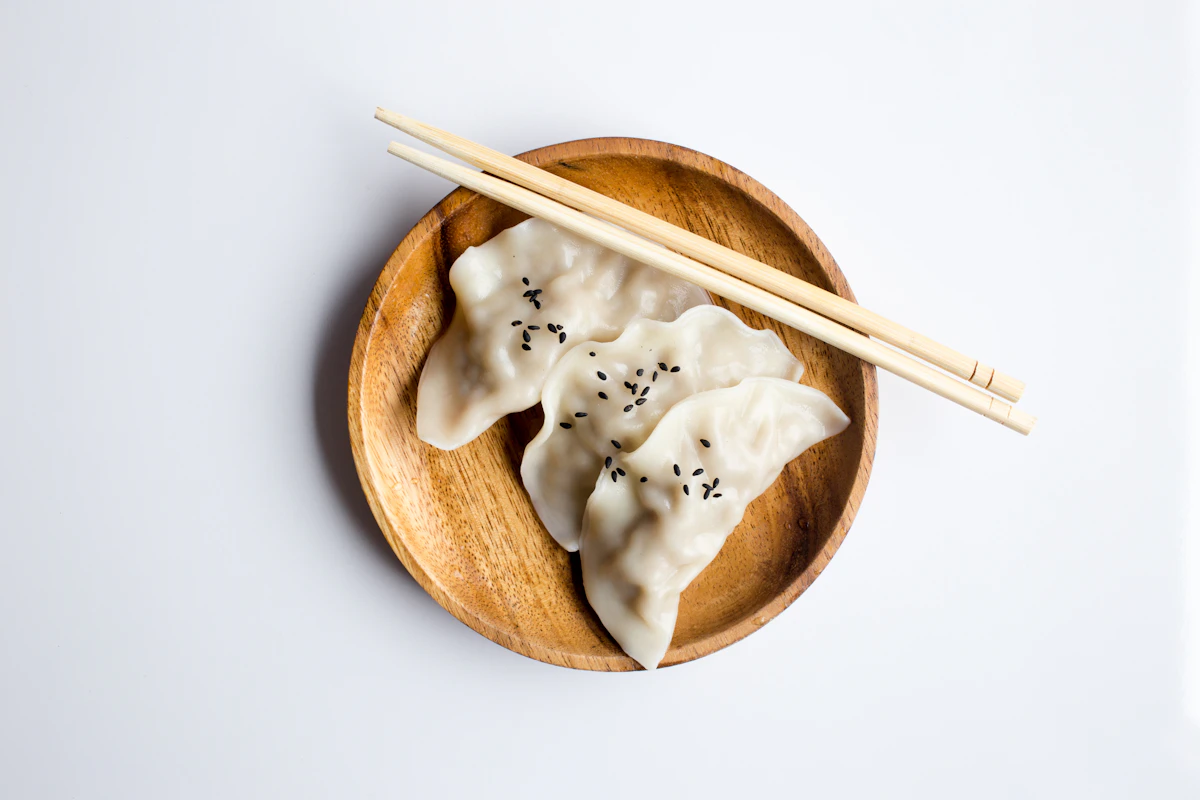
The most repeated origin story links jiaozi to Zhang Zhongjing, a Han-dynasty physician said to have folded lamb, herbs, and warming ingredients into dough to treat frostbitten ears. The story may be partly legend, but it explains why dumplings still feel tied to winter: they are warming, communal, and made by hand when families are indoors together.
Over time, jiaozi moved from practical food to ritual food. Their crescent shape resembles old silver ingots, so eating them at Lunar New Year became a wish for wealth. In northern China, where wheat is the staple, making dumplings together on New Year's Eve is as important as eating them. The labor is the ceremony: rolling wrappers, folding edges, boiling batches, and arguing gently about whose pleats are neatest.
Regional fillings tell you where you are
Pork and cabbage is the north's comfort filling, especially when the cabbage is salted and squeezed so the dumpling stays juicy without leaking. Pork with chive is sharper and greener. Lamb with carrot or cumin points west and north, where halal and Silk Road flavors enter the dumpling vocabulary. Shrimp, fish, and delicate vegetable fillings appear more often in coastal and southern kitchens.
The cooking method matters as much as the filling. Shui jiao are boiled and served soft, often with vinegar and garlic. Guo tie are pan-fried potstickers with crisp bottoms and steamed tops. Zheng jiao are steamed, common in Cantonese and banquet settings. Soup dumplings belong to a related but different family: their wrapper, broth, and eating technique are specific enough to deserve their own rules.
Why dumplings still feel political
Dumplings are regional identity in edible form. Northerners often speak of them as the proper food of reunion, while southerners may treat them as festive but not central. In diaspora communities, dumplings become a portable version of home: easy to freeze, easy to teach children, and adaptable to local ingredients. That flexibility is why the same jiaozi can be a grandmother's recipe, a restaurant appetizer, and a freezer staple.
The politics are gentle but real. Who folds, who eats first, whether the filling is traditional, whether store-bought wrappers are acceptable — these questions carry family history. The best way to understand dumplings is to make them with someone who cares. The recipe will teach you the food; the arguments will teach you the culture.
About the author
Wen Liu writes for China Eating about regional Chinese food, street markets, and the everyday rituals of the Chinese table.
Frequently asked
Common questions
- What is the difference between jiaozi and wontons?
- Jiaozi usually have a thicker round wrapper, a fuller filling, and are boiled, steamed, or pan-fried. Wontons use a thinner square wrapper, are often served in soup, and usually have a looser, more delicate filling.
- Why are dumplings eaten at Chinese New Year?
- Their shape resembles old silver ingots, so they symbolize wealth and good fortune. In northern China, making dumplings together on New Year's Eve is also a family reunion ritual.
- Can dumplings be made ahead?
- Yes. Freeze them uncooked on a tray until firm, then store them in a bag. Cook from frozen without thawing; boiling or pan-frying only takes a few extra minutes.
Keep reading