Chinese Noodles: A Guide to Types, Regions, Broths, Sauces, and How to Eat Them
A detailed guide to Chinese noodles, from hand-pulled wheat noodles and knife-cut ribbons to rice noodles, cold sesame noodles, beef noodle soup, dan dan noodles, and regional noodle culture.
Chinese noodles are a map of grain, climate, and migration
Chinese noodles are not one dish. They are a whole system of grain, water, hand technique, broth, sauce, and regional habit. A bowl of Lanzhou beef noodles, a plate of Sichuan dan dan noodles, a cold bowl of sesame noodles in a Beijing summer, and a rice noodle breakfast in Yunnan all belong to the same broad noodle world, but they answer different questions: wheat or rice, soup or dry, chewy or slippery, breakfast or late-night, comfort or heat.
The easiest way to understand Chinese noodles is to stop asking for the single most famous bowl. Ask where the noodle comes from, what grain it uses, what texture the cook is chasing, and whether the flavor lives in the broth, the sauce, or the toppings. Once you read those four clues, the menu becomes much less mysterious.
Wheat noodles dominate the north and northwest
In northern and northwestern China, wheat is the anchor. That is why noodles there often feel chewy, elastic, and substantial. Hand-pulled noodles depend on gluten strength and repeated stretching. Knife-cut noodles rely on a firm dough shaved into irregular ribbons. Biangbiang noodles are wide, belt-like sheets that carry chili oil, vinegar, garlic, and greens in dramatic folds.
These noodles are not only carbohydrates; they are texture engineering. A good pulled noodle should spring back under the teeth. A knife-cut noodle should have a thick center and thinner edges. A wide noodle should hold sauce in its folds without collapsing. The pleasure is physical before it is aromatic.

Rice noodles belong to the south, southwest, and breakfast table
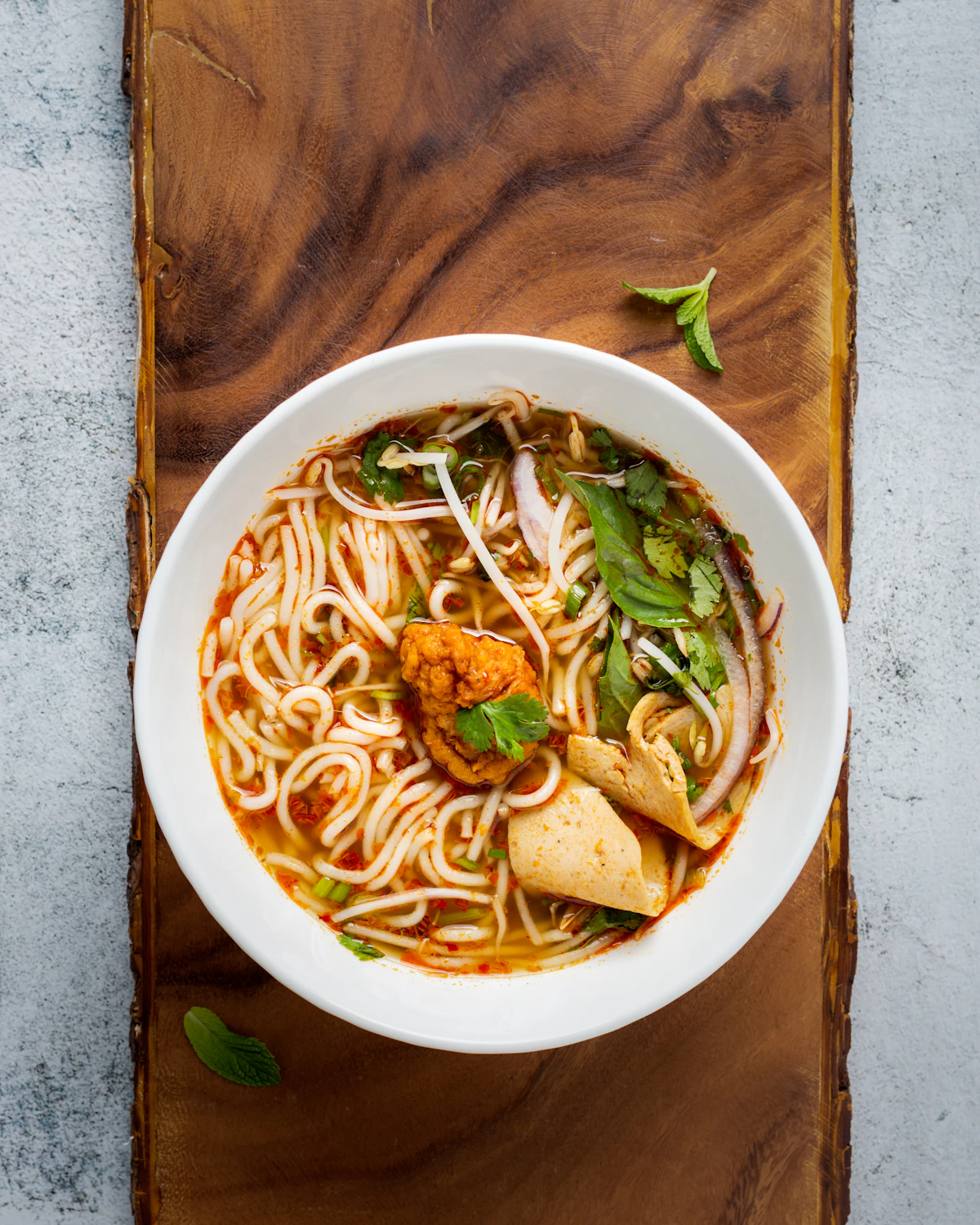
Rice noodles tell a different story. They are smoother, lighter, and often more slippery than wheat noodles. In Yunnan, crossing-the-bridge rice noodles turn a hot broth into a ceremony: thin meat, vegetables, herbs, and rice noodles are added at the table. In Guilin, rice noodles meet pickled vegetables, peanuts, chili, and fragrant braised meat. In Guangdong and Hong Kong, rice noodle rolls are steamed into soft sheets and served with soy sauce.
Rice noodles are especially important at breakfast. They can be quick, warm, and filling without feeling heavy. The bowl may be brothy, dry-mixed, sour, spicy, or herb-driven, but the noodle itself usually stays gentle. That gentleness is why rice noodles can carry strong condiments without turning the meal harsh.

Soup noodles are built from broth, topping, and timing
A soup noodle bowl is only as good as its broth timing. The noodles should arrive springy, not swollen. The broth should taste complete before the toppings go in. Lanzhou beef noodles are a classic example: clear beef broth, hand-pulled noodles, slices of beef, radish, chili oil, cilantro, and green garlic. The bowl looks simple because every part has a job.
Other soup noodles are richer or more local. Taiwan beef noodle soup is darker, soy-braised, and warming. Yunnan rice noodle soups often feel herbaceous and clean. Cantonese wonton noodles keep the noodle thin and alkaline, the broth clear, and the wontons delicate. Across styles, the rule is the same: the noodle must fit the soup, not fight it.
Dry noodles put the sauce in charge
Dry noodles are not dry in flavor. They simply move the main flavor from broth to sauce. Dan dan noodles use chili oil, preserved vegetables, sesame or peanut richness, minced pork, and Sichuan peppercorn to make a small bowl taste explosive. Beijing zhajiangmian uses wheat noodles with a salty fermented soybean paste sauce, cucumber, radish, and other crisp vegetables. Wuhan hot dry noodles use sesame paste, alkaline noodles, pickles, and chili oil for a dense breakfast bowl.
The best dry noodle dishes are mixed at the last second. Before mixing, the bowl may look separated: sauce at the bottom, noodles in the middle, toppings above. After mixing, every strand should be coated but not drowned. If the sauce pools heavily at the bottom, the balance is off. If the noodle tastes plain after three bites, the mixing was incomplete.
Cold noodles are a summer language
Cold noodles are where Chinese noodle culture becomes especially practical. In hot weather, a cold bowl can deliver salt, vinegar, sesame, garlic, cucumber, chili oil, and chew without the weight of a steaming soup. Sichuan liangmian, sesame cold noodles, and northern cold mixed noodles all solve the same summer problem: how to eat something filling when the air is too hot for heavy broth.
The key is contrast. Cold noodles need enough oil or sesame paste to cling, enough vinegar or pickles to wake up the bowl, and enough crunch to keep the texture alive. Cucumber, bean sprouts, shredded chicken, peanuts, herbs, and chili oil are not decorations; they keep the cold bowl from becoming flat.
How to order Chinese noodles well
Start by deciding whether you want soup or dry-mixed noodles. If the shop specializes in one thing, follow the shop. At a Lanzhou noodle counter, order the beef noodles and choose thickness if offered. At a Sichuan snack shop, dan dan noodles or cold noodles are usually safer than a generic soup noodle. At a breakfast stall in the south, watch what bowls are leaving the kitchen fastest.
Ask about spice level only after you know the style. A Sichuan noodle may be defined by chili oil, while a Cantonese wonton noodle should not be spicy at all. Add vinegar gradually. Taste before stirring in extra chili. And if a bowl comes with pickles, herbs, or crunchy toppings, mix them in instead of leaving them as garnish. Chinese noodles often finish themselves in the bowl.
The noodle mistakes travelers make
The first mistake is treating every noodle like ramen. Chinese noodle bowls follow different rules: some are meant to be clear, some oily, some sour, some room-temperature, some small and snack-like. The second mistake is waiting too long to eat. Many noodles lose their best texture quickly, especially hand-pulled wheat noodles and thin wonton noodles. Photograph fast if you must, then mix and eat.
The third mistake is ignoring the shop's specialty. A noodle restaurant usually tells you what matters through its speed, equipment, and menu length. If the cook is pulling noodles in the window, order the pulled noodles. If everyone is mixing sesame paste at breakfast, order hot dry noodles. If the broth pot smells like beef, do not overthink it. The house specialty is often the best introduction.
Frequently asked
Common questions
- What are the most famous Chinese noodle dishes?
- Famous Chinese noodle dishes include Lanzhou beef noodles, dan dan noodles, biangbiang noodles, zhajiangmian, Wuhan hot dry noodles, Guilin rice noodles, Yunnan crossing-the-bridge rice noodles, Cantonese wonton noodles, and cold sesame noodles.
- Are Chinese noodles usually wheat or rice?
- Both. Northern and northwestern China use many wheat noodles, including hand-pulled, knife-cut, and wide belt noodles. Southern and southwestern regions use many rice noodles, especially for breakfast soups and dry-mixed bowls.
- What is the difference between soup noodles and dry noodles?
- Soup noodles depend on broth, timing, and toppings. Dry noodles depend on sauce, oil, paste, chili, vinegar, and mixing. A dry noodle bowl can be very flavorful even without much visible liquid.
- What Chinese noodles should a beginner try first?
- Try one soup noodle and one dry noodle: Lanzhou beef noodles for clear broth and hand-pulled texture, and dan dan noodles or zhajiangmian for sauce-driven flavor.
Keep reading